As the "second skin" of jewelry, jewelry display cases not only undertake the basic function of displaying jewelry but also need to convey brand tone and highlight the bright luster of jewelry through the texture of materials. The rationality of material selection directly affects the display effect, service life, and safety performance, requiring a balance of three core needs: aesthetics, practicality, and safety. Below, combined with the core keywords of jewelry display cases, we detail various mainstream materials and material selection logic.
https://www.lomedisplay.com.cn(Click to learn more)
I. Core Substrates: Laying the Foundation for Stability and Texture of Display Cases
1. Wooden Materials: The Preferred Choice for High-End Textures
Wooden substrates are the mainstream choice for high-end jewelry display cases, corresponding to core keywords: high-end, warm, customizable, brand tone. Common types include solid wood, medium-density fiberboard (MDF), and particleboard, each suitable for different scenarios.
Solid wood materials (such as oak, walnut, and cherry wood) have natural textures and a warm touch, which can instantly enhance the luxury of display cases. They are suitable for jewelry that pursues cultural heritage and high-end positioning, such as jadeite, nephrite jade, and high-end colored gemstones. Their advantages are outstanding texture, good environmental friendliness, and strong plasticity, allowing for custom shapes through carving and polishing processes. However, they have high costs and are prone to deformation due to environmental humidity, requiring moisture-proof treatment. They are suitable for brand flagship stores, high-end jewelry clubs, and other scenarios.
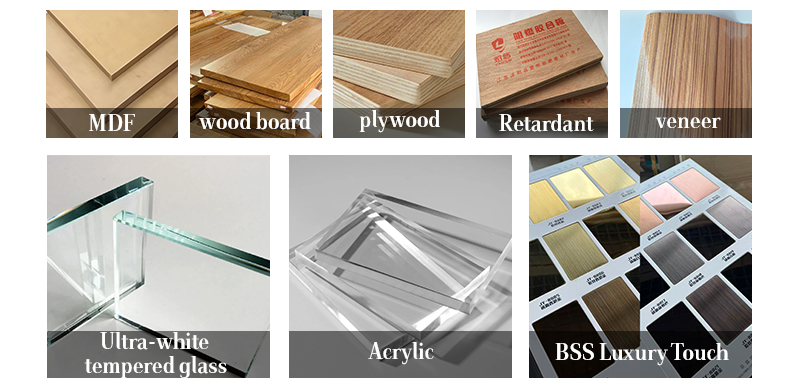
Medium-density fiberboard (MDF) is an optimal choice balancing cost-effectiveness and texture. After veneering (wood veneer, baking paint) treatment, it can simulate the texture of solid wood, with high flatness and easy processing, making it suitable for mass customization of display cases with complex shapes. When paired with piano baking paint technology, it can present a mirror texture, suitable for jewelry pursuing minimalist luxury such as diamonds and platinum. Its disadvantage is poor water resistance, requiring proper edge sealing to avoid deformation in humid environments. Particleboard has lower costs but weaker load-bearing capacity and stability than MDF, mostly used for basic cabinets in temporary exhibitions or mid-to-low-end jewelry stores.
2. Metal Materials: The Sleek Choice for Modern Styles
Metal materials, with core keywords light luxury, durable, corrosion-resistant, three-dimensional, are commonly used in modern minimalist and light luxury jewelry display cases, mainly including stainless steel and aluminum alloy.
Stainless steel (304 and 316 grades) is the first choice for high-end metal display cases. It has the characteristics of corrosion resistance, scratch resistance, and high gloss, and can be polished into mirror, brushed, sandblasted, and other textures. When used with glass or leather, it can highlight the delicacy of jewelry such as diamonds and K-gold. 316 stainless steel has better rust resistance, suitable for stores in coastal areas or high-humidity environments. Its disadvantages are high cost and high processing difficulty, suitable for key display areas of brand image stores.
Aluminum alloy is lightweight and cost-effective. Its surface can undergo anodizing treatment to present various colors such as gold, silver, and black, suitable for young and fashionable jewelry brands (such as silver jewelry and trendy colored gemstones). Its advantages are non-deformability and ease of transportation and installation, while its disadvantage is slightly inferior texture to stainless steel with limited load-bearing capacity, mostly used for auxiliary structures such as display case frames and columns.
II. Core Panels: Dual Protection of Transparency and Safety
Display case panels directly determine the clarity of jewelry display, with core keywords: transparent, safe, scratch-resistant, anti-reflective. The mainstream materials are glass and acrylic.
1. Glass Materials: A Must-Have for High-End Displays
Glass is the core panel material for jewelry display cases, which can maximize the restoration of the natural luster of jewelry. Common types are ultra-clear tempered glass and laminated tempered glass.
Ultra-clear tempered glass has a light transmittance of over 90%, with few impurities and no greenish tint. It can accurately present the fire of diamonds, the color of jadeite, and the transparency of colored gemstones. When paired with a frameless design, it looks lighter and more high-end, making it a standard configuration for high-end jewelry display cases. At the same time, it has tempered properties, breaking into obtuse-angled particles with high safety, avoiding scratches to jewelry or customers. Laminated tempered glass adds a film between two layers of glass, which does not scatter when broken, offering stronger protection. It is suitable for displaying high-value jewelry (such as carat diamonds and rare colored gemstones), but has slightly lower light transmittance than ultra-clear glass and higher cost.
In addition, some display cases use anti-reflective glass, which reduces light reflection through a special coating, preventing customers from being unable to clearly observe jewelry due to reflection. It is suitable for mall counters with sufficient lighting.
2. Acrylic Materials: The Choice for Cost-Effectiveness and Portability
Acrylic (plexiglass) has the advantages of lightweight, impact-resistant, easy to process, and low cost, suitable for mid-to-low-end jewelry stores, temporary exhibitions, or pop-up stores. Its light transmittance is close to that of glass, and it can be made into transparent, frosted, colored, and other styles with strong plasticity, enabling the creation of curved and irregular panels. However, it is prone to scratches and yellowing after long-term use, with insufficient texture, making it unsuitable for long-term display of high-value jewelry.
III. Auxiliary Materials: Enhancing Texture and Experience in Details
Although not core, auxiliary materials can strengthen the display effect and user experience, with core keywords: moisture-proof, anti-slip, light-shielding, atmosphere creation, mainly including leather, flannel, LED light strips, edge banding, etc.
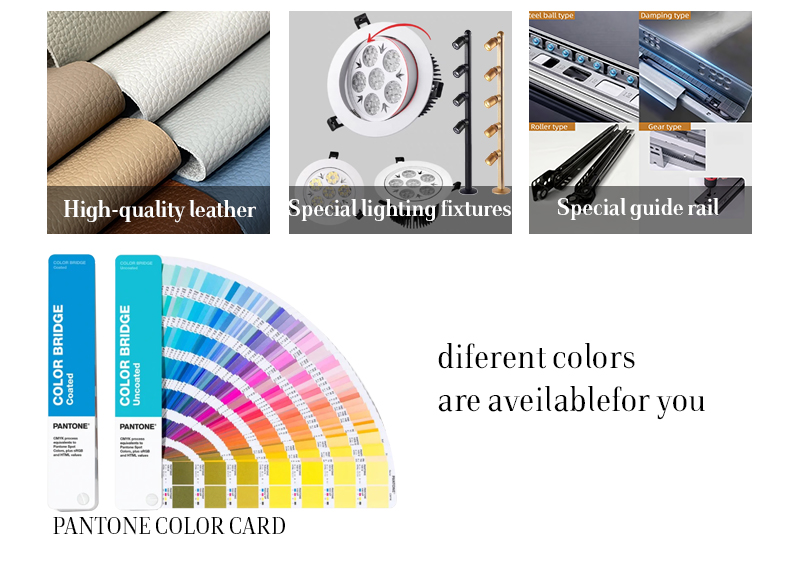
Leather (PU leather, genuine leather) is mostly used for internal trays and inner walls of display cases, adding a soft texture and avoiding collision and wear between jewelry and hard materials. It is suitable for fragile jewelry such as pearls and jadeite. Genuine leather has a better texture, suitable for high-end displays; PU leather is cost-effective and easy to clean, with wider applications. Flannel (velvet, flocked fabric) comes in a variety of colors (black, red, dark blue, etc.), which can highlight jewelry luster through color contrast and has good anti-slip effects. It is often used for tray display of rings and necklaces, requiring regular cleaning to avoid dust affecting aesthetics.
As an "invisible enabler", LED light strips need to be used with light-transmitting materials, with core keywords: eye-protective, energy-saving, color rendering. Choosing LED light strips with a high color rendering index (Ra≥90) can restore the true color of jewelry, avoiding misjudgment by customers due to light deviation. Cool light is suitable for diamonds and platinum, while warm light is suitable for gold and jadeite. Layered light strips can create a three-dimensional light and shadow effect, enhancing the brightness of jewelry.
Auxiliary materials such as edge banding and moisture-proof boards are related to the durability of display cases. High-quality edge banding can prevent moisture penetration and formaldehyde emission, suitable for stores in humid areas; moisture-proof boards can be used for cabinet backplanes and bottom panels to extend the service life of display cases.
IV. Core Logic of Material Selection: Adapting to Jewelry Characteristics and Brand Positioning
1. Select materials based on jewelry categories: For high-value jewelry (diamonds, rare colored gemstones), prioritize ultra-clear tempered glass + stainless steel/solid wood substrates, paired with genuine leather trays and high-color-rendering LED light strips to highlight high-end texture and safety; for mid-to-low-end jewelry (silver jewelry, affordable colored gemstones), acrylic + aluminum alloy/MDF can be used to control costs while ensuring display effects; for fragile jewelry (pearls, jadeite), focus on soft auxiliary materials to avoid wear.
2. Match brand tone: High-end traditional brands are suitable for solid wood + piano baking paint + ultra-clear glass to convey a warm and luxurious feeling; modern light luxury brands can use stainless steel + frosted glass + metal brushing technology to create a sleek and high-end sense; young and trendy brands can use acrylic + colored light strips + irregular designs to show personality.
3. Consider usage scenarios: Mall counters need to focus on safety (tempered glass, stable substrates) and light adaptation (anti-reflective glass, high-color-rendering light strips); store displays need to consider moisture-proof and scratch-resistant performance; temporary exhibitions prioritize lightweight and easy-to-assemble materials (aluminum alloy, acrylic).
In conclusion, the material selection for jewelry display cases is not a single material stack, but needs to focus on the three cores of "highlighting jewelry value, conveying brand tone, and ensuring practical safety", organically combining substrates, panels, and auxiliary materials to complement materials and jewelry, and maximize the bright charm of jewelry.


