


Precisely Enhance Jewelry Texture: A Complete Guide to Choosing Lighting for Jewelry Display Cabinets
Half of the dazzling luster of jewelry comes from its own material and craftsmanship, and the other half relies on the precise setting of lighting. Inappropriate lighting can obscure the fire and distort the color of jewelry, even lowering the product grade; while scientific lighting matching can make gold more luxurious, diamonds more brilliant, and jadeite more moist and transparent. This article breaks down the selection logic of jewelry display cabinet lighting from core parameters, category adaptation, layout skills and other
aspects, helping to create a more attractive display effect.
Today, Guangzhou Lemei Display Products Co., Ltd. will take you to understand how to choose lighting for jewelry display cabinets!
https://www.lomedisplay.com.cn (Click to learn more)
I. Grasp Core Parameters First: "Hard Standards" for Lighting Selection
When choosing lighting for jewelry display cabinets, priority should be given to locking in the four core parameters: color temperature, color rendering index, illuminance, and beam angle. Meanwhile, anti-glare, heat dissipation and energy-saving requirements should be taken into account, and blind pursuit of "brightness" should be avoided.
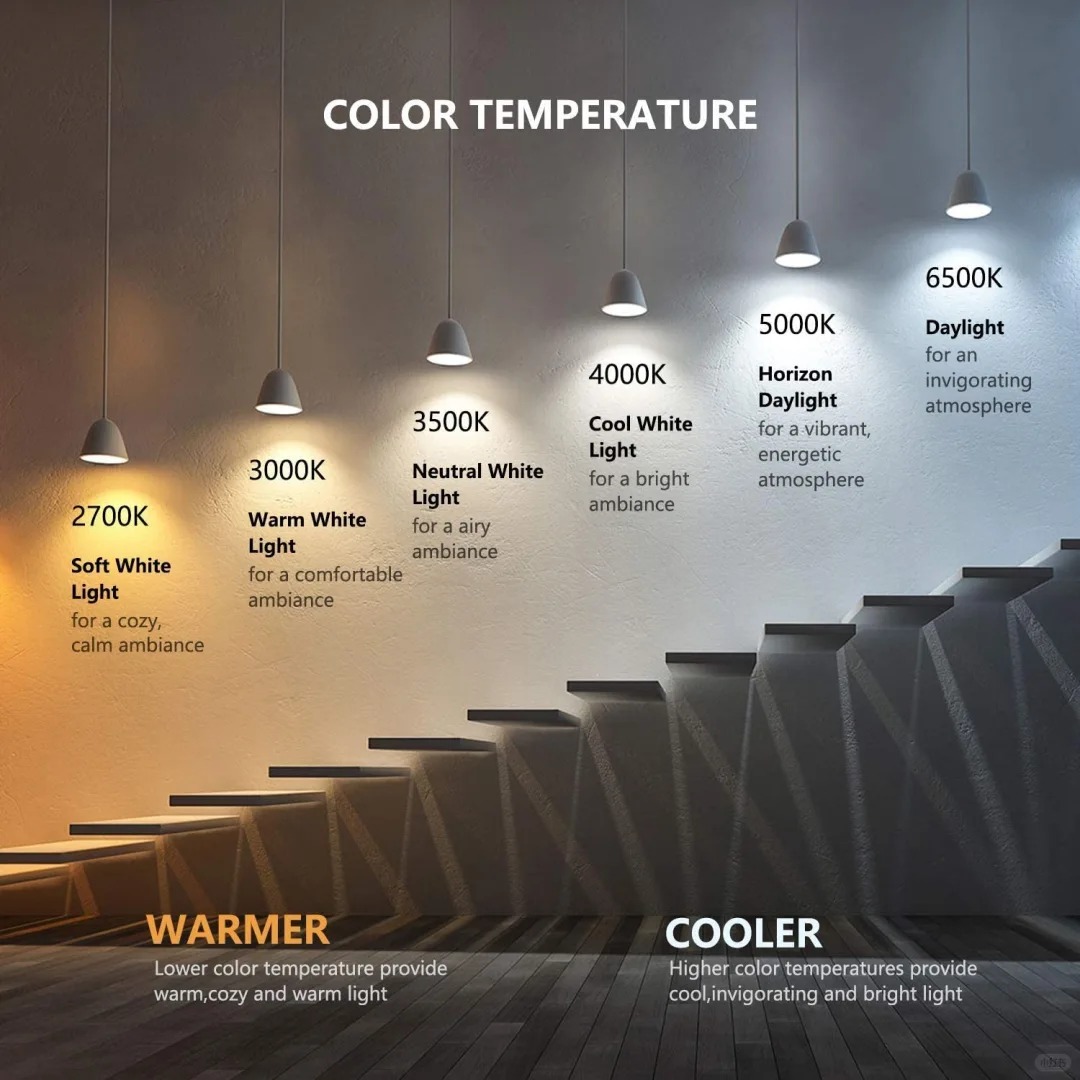
1. Color Temperature (K): Define the Temperament of Jewelry
Color temperature determines the warm or cool tone of light, directly affecting the visual texture of jewelry. It must be accurately matched according to jewelry categories and display styles:
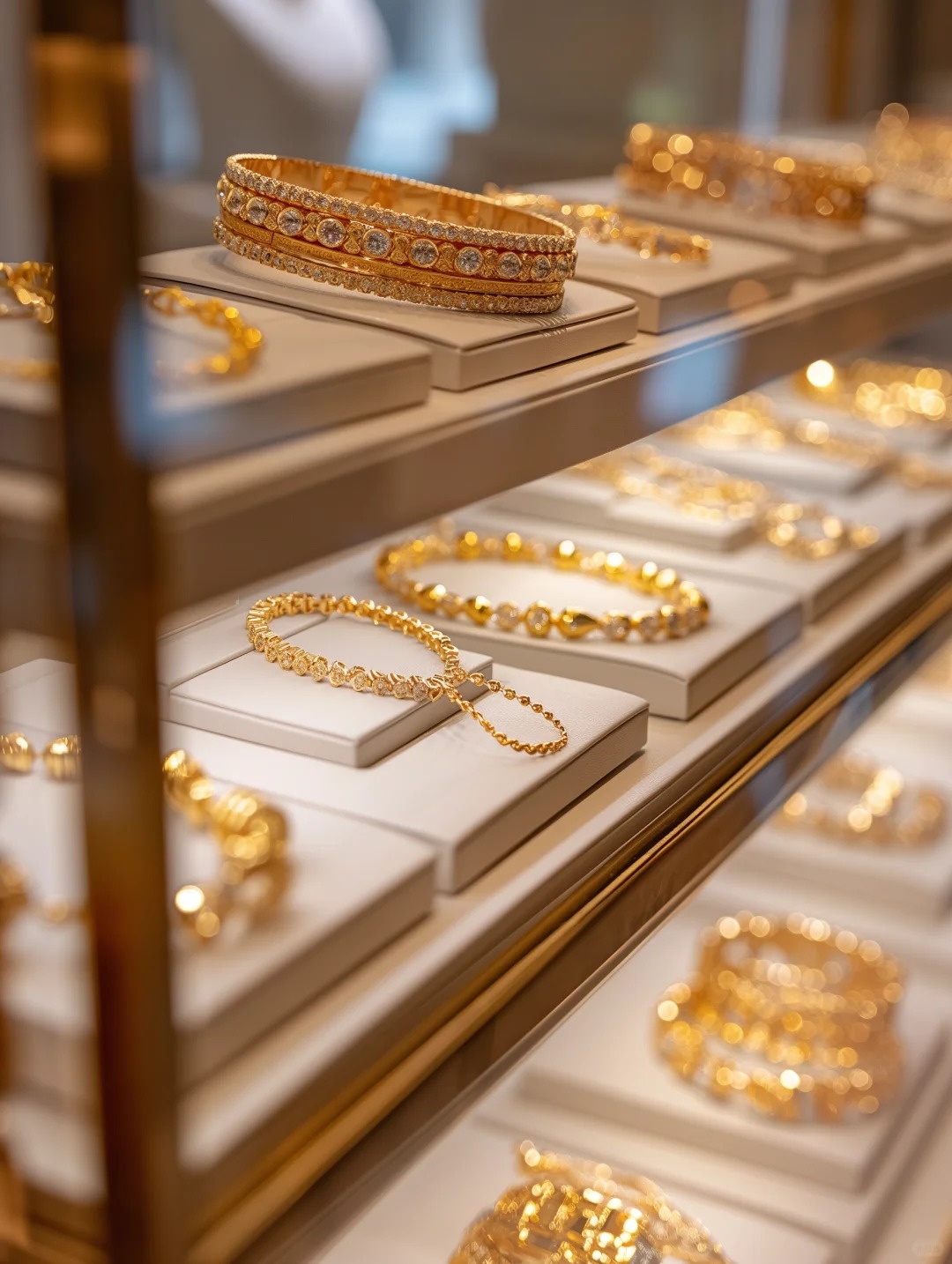
Warm Light (3000K-3500K): With soft yellowish light, it can highlight the warmth and metallic luster of warm-toned jewelry such as gold, K-gold, amber, and beeswax, creating a luxurious and warm atmosphere. It is suitable for classic jewelry areas and retro-style display cabinets. Note to avoid excessively low color temperature, which may make jewelry look dull and lose transparency.
Neutral Light (4000K4500K):Closely resembling natural light, it offers balanced color rendering without leaning warm or cool. Ideal for diamonds, platinum, silver, jadeite, and nephrite, it can both restore the fire of diamonds and the coldness of platinum, as well as present the emerald green and transparency of jadeite. As the most versatile color temperature, it is suitable for comprehensive jewelry counters and island display cabinets.
Cool Light (Above 5000K): With a whitish and bluish hue, it can enhance the refraction effect of diamonds but tends to make warm-toned jewelry lose its texture. It is only suitable for modern minimalist display cabinets and diamond-exclusive exhibition areas, and its application scope must be controlled to avoid an overly cold overall atmosphere.
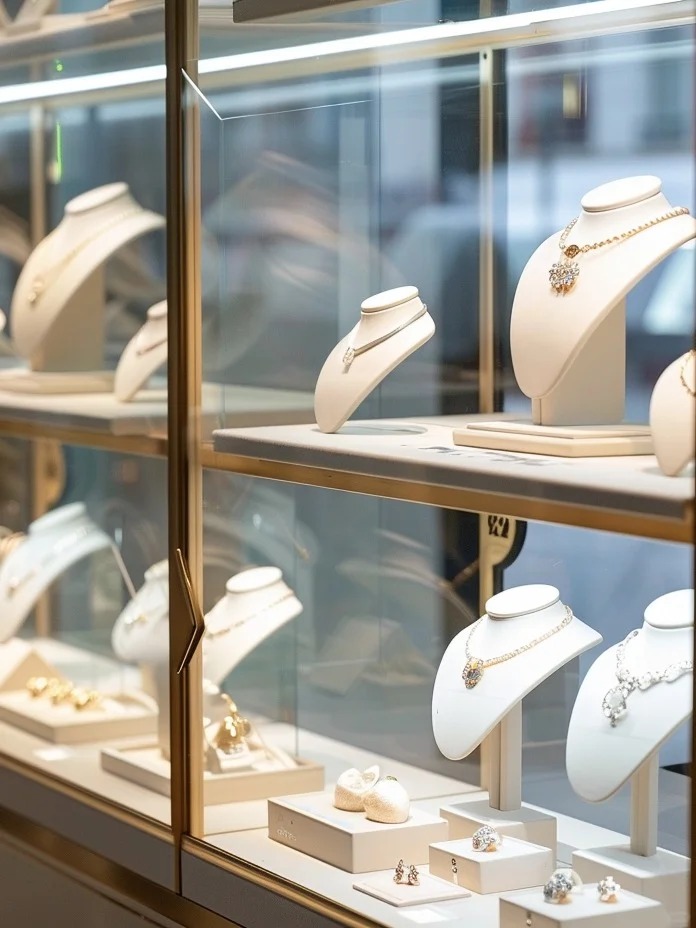
2. Color Rendering Index (Ra): Restore the True Color of Jewelry
Core Standard: Ra≥95. Among them, diamonds and colored gemstones (rubies, sapphires, emeralds, etc.) need to reach Ra≥98 to avoid color distortion of gemstones due to insufficient color rendering (such as dark rubies and grayish jadeite), which may affect customers' judgment.
Additional Attention: For colored gemstones, special color rendering indices (R9, R15) can be referenced. R9 represents red color restoration ability, and R15 represents skin color restoration ability, which can more accurately present the color layers and transparency of gemstones.
3. Illuminance (Lux): Balance Brightness and Comfort
Categories Requiring High Light Efficiency: For jewelry that needs to highlight fire and refraction, such as diamonds and platinum, the illuminance should be controlled between 1500Lux-3000Lux. Match with spot light sources to enhance the light focusing effect and make the facet reflection of diamonds clearer.
Categories Requiring Medium-Low Light Efficiency: For gold, jadeite, nephrite, pearls, etc., the illuminance should be controlled between 800Lux-1500Lux. Excessively strong light may cause dazzling reflections of gold, loss of warmth in pearls, and visual errors of "dry lines" on jadeite.
Precautions: Avoid excessive illuminance difference between inside and outside the display cabinet, otherwise customers may experience visual fatigue when entering the display area from a bright environment. Meanwhile, anti-glare design should be matched to prevent direct light from shining into customers' eyes.
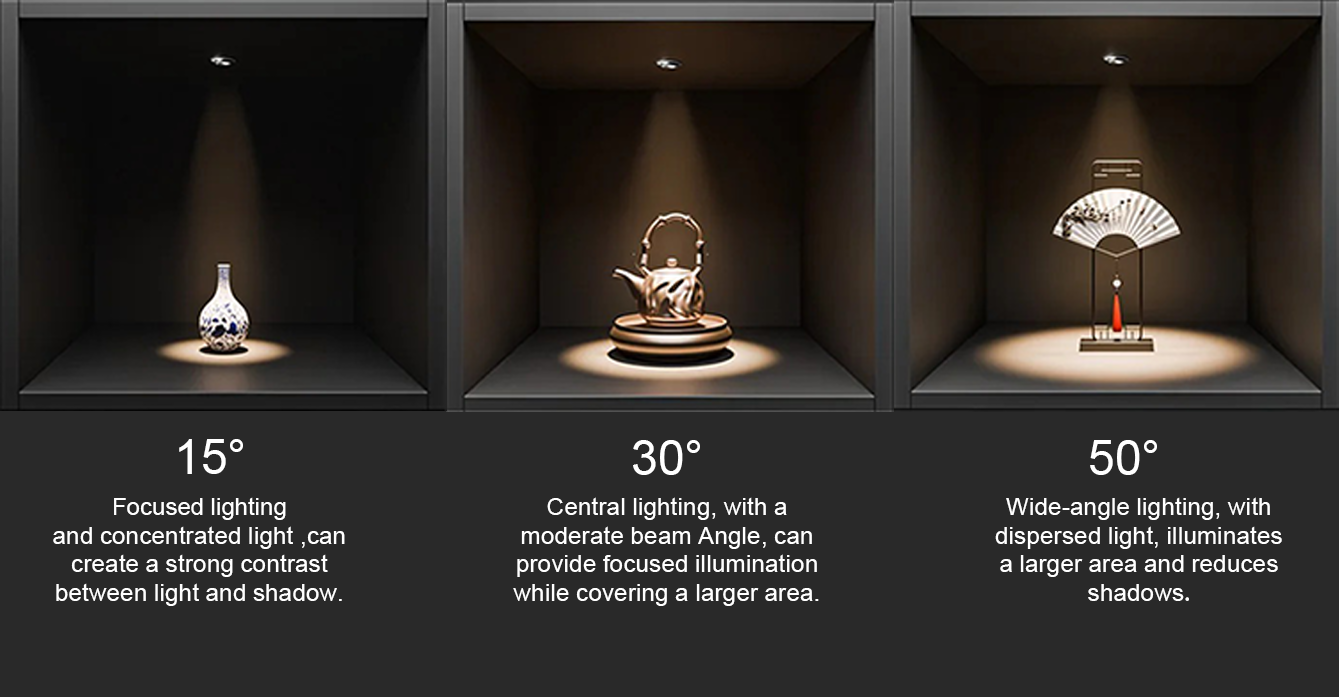
4. Beam Angle: Precisely Focus on Exhibits
Narrow Beam Angle (15°-25°): Concentrated light, suitable for independent display cabinets and high-end jewelry items (such as large carat diamonds and rare gemstones). It can precisely focus on exhibits, form light-dark contrast, and highlight the scarcity and luxury of exhibits.
Medium Beam Angle (30°-45°): Moderate irradiation range, suitable for regular display cabinets and combined displays (such as ring, necklace and earring sets). It can evenly cover exhibits, balance detail presentation and overall beauty, and is the most commonly used beam angle.
Wide Beam Angle (Above 60°): Diffused light, suitable for open display cabinets and window displays to create an overall atmosphere. It should be used with narrow beam angle lighting to avoid scattered light and lack of layering of exhibits when used alone.
II. Adaptation by Jewelry Category: Targeted Lighting Solutions
1. Diamonds/Platinum/Silver
2. Gold/K-Gold
3. Jadeite/Nephrite
4. Colored Gemstones (Ruby/Sapphire/Emerald, etc.)
5. Pearls
III. Lighting Layout and Light Source Selection: Details Determine Effect
1. Layout Skills: Hierarchical Lighting for No-Dead-Angle Presentation
Combination of Main and Auxiliary Lights: Use spotlights as main lights to focus on core exhibits, and light strips as auxiliary lights to outline the contour of the display cabinet and fill shadow areas (such as under laminates and corners inside the cabinet). Avoid light-dark dead angles of exhibits and enhance overall layering.
Built-in Design: Embed light strips and spotlights in the top, laminates or back panels of the display cabinet to avoid exposed light sources, reduce glare, and make the display cabinet more concise and high-end, highlighting the jewelry itself.
Zoned Control: Set separate light switches and brightness adjustments for different category exhibition areas. The light intensity can be adjusted according to passenger flow and scenarios (day/night, exhibition/daily use) to balance energy saving and display effect.
2. Light Source Type: Prioritize LED and Avoid Pitfalls
Avoid Fluorescent Lamps: Poor color rendering, easy to cause color distortion of jewelry, and contain ultraviolet rays, which may damage organic jewelry (pearls, corals) after long-term irradiation.
Avoid Halogen Lamps: High heat generation, easy to increase the temperature inside the cabinet, accelerate the oxidation of jewelry (such as blackening of silver jewelry), and have high energy consumption and short service life.
Control Ultraviolet Rays: All light sources need to filter ultraviolet rays (UV content ≤3%), especially for organic jewelry and colored gemstones, to avoid color fading and material aging caused by ultraviolet rays.
3. Auxiliary Design: Small Details to Enhance Lighting Effect
Lining Matching: Black and dark gray linings can enhance light contrast and highlight the luster of diamonds and platinum; red and gold linings are suitable for gold to strengthen luxury; light-colored linings are suitable for jadeite and nephrite to restore natural colors.
Glass Selection: Adopt low-reflection ultra-clear tempered glass to reduce light refraction interference, allowing customers to clearly see jewelry details. Meanwhile, match with anti-fingerprint coating to avoid glass reflection affecting the viewing experience.
Heat Dissipation Treatment: Reserve heat dissipation holes for built-in lighting to avoid excessive temperature inside the cabinet. Especially for high-end jewelry with high constant temperature requirements (such as natural gemstones and organic jewelry), prevent material damage.
IV. Pitfall Avoidance Guide: Don't Make These Mistakes
Blind Pursuit of High Brightness: Excessively strong light is easy to cause customers' visual fatigue, cover jewelry details, and even make jewelry look "cheap". Illuminance should be controlled according to categories.
Chaotic Mix of Color Temperatures: Avoid using warm light and cool light at the same time in the same display cabinet or the same category exhibition area, which may cause visual clutter and affect the unity of the overall atmosphere.
Ignoring Color Rendering Index: Only focusing on brightness but not color rendering leads to jewelry color distortion. Customers may find that the actual product does not match the display effect after purchase, causing disputes.
Exposed Light Sources Without Shielding: Directly exposed light sources will produce strong glare, making it impossible for customers to clearly observe jewelry and reducing the display texture.
V. Summary: Lighting is the "Second Soul" of Jewelry
The core of choosing lighting for jewelry display cabinets is "jewelry-centric". By accurately matching color temperature, color rendering index, illuminance and beam angle, combined with category characteristics and layout skills, lighting can become a value-added factor for jewelry. Good lighting can not only highlight the brilliance and value of jewelry, but also create a high-end and comfortable shopping atmosphere, improving customers' experience and purchase intention. It is recommended to conduct lighting tests for core categories before determining the lighting plan to ensure the effect meets expectations before mass implementation.
https://www.lomedisplay.com.cn (Click to learn more)

https://www.lomedisplay.com.cn (Click to learn more)


0086+189-8899-0175(Bill)

0086+189-8899-0175(Bill)


+0086+189-8899-0175(Bill)

0086+189-8899-0175(Bill)


